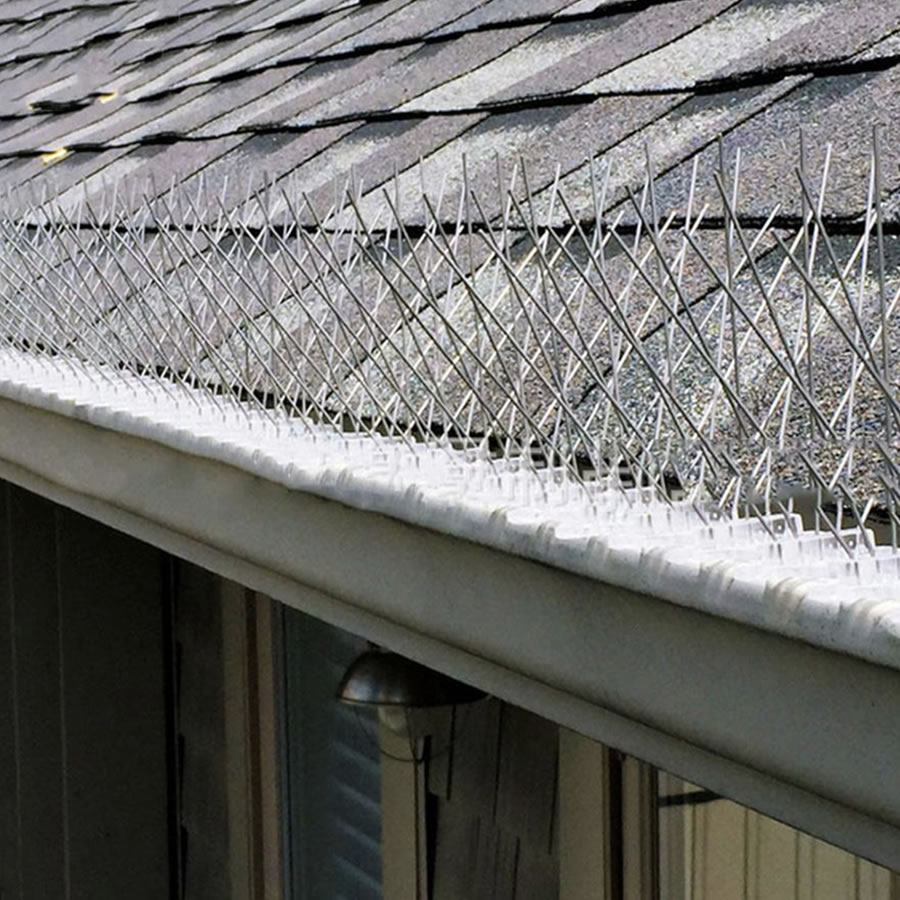
Clear leaves and nesting material from between the pins once or twice a year
Shipping & returns
Tracked delivery anywhere in France. It is free on orders of €35 or more, and a flat €15 below that. Allow 10 to 18 business days, after a 2 to 5 days processing time.
Under the EU consumer rights directive you have 14 days from delivery to cancel for any reason, and a further 14 days to send it back in resaleable condition. We refund the price you paid, including standard delivery. You cover the cost of returning it unless the item is faulty.
If it arrives faulty, damaged or not as described, we put it right at no cost to you under the two year legal guarantee of conformity that applies across the EU, return postage included.
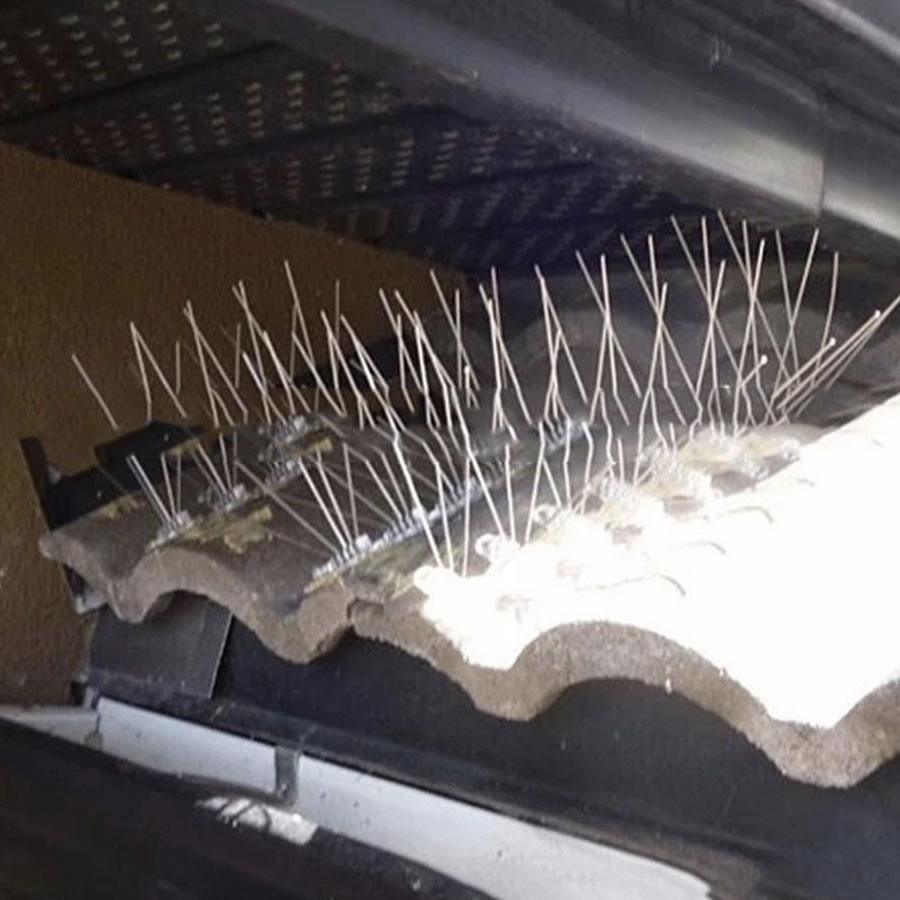
Clear leaves and nesting material from between the pins once or twice a year. Enough debris packs down into a platform and a bird will stand on that instead.
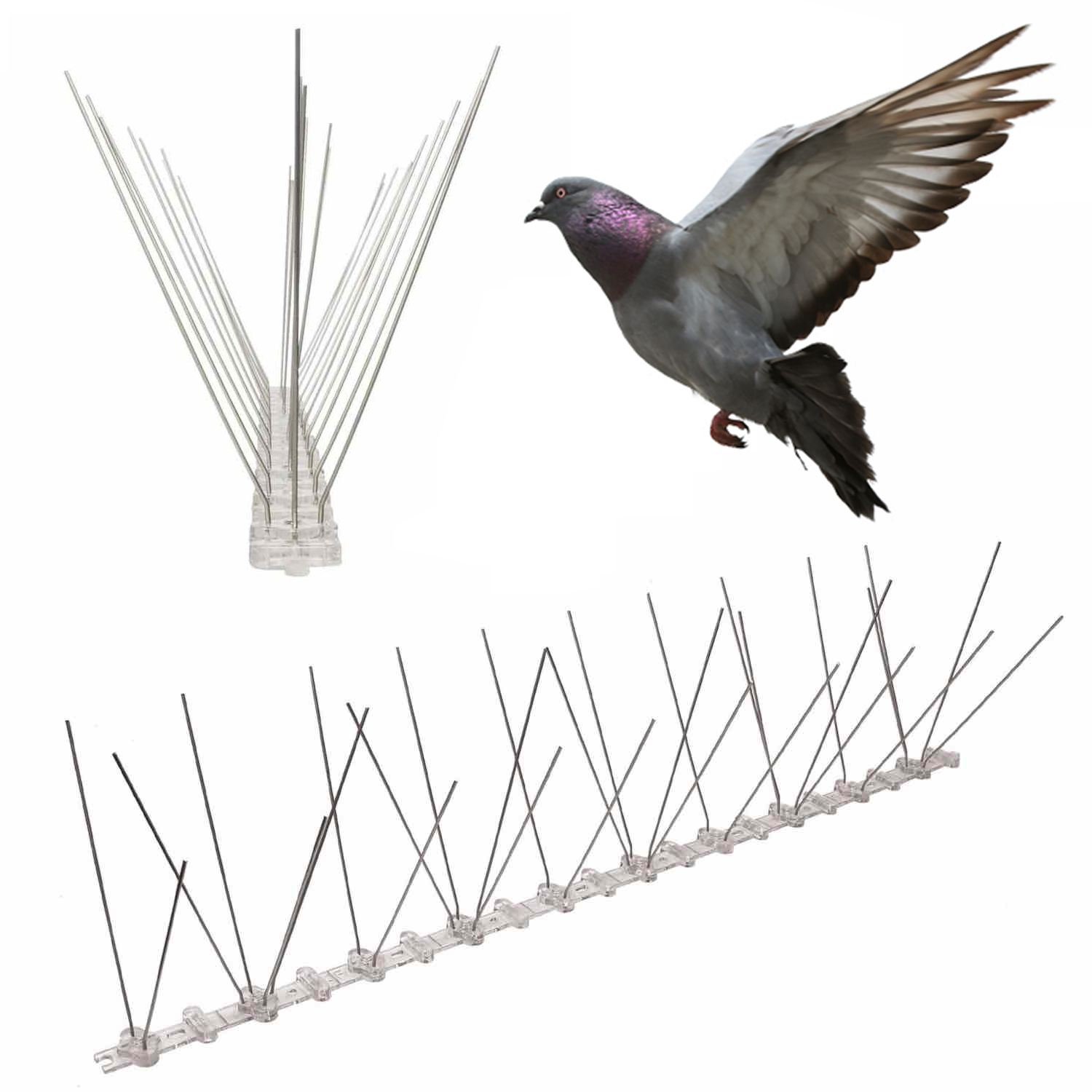
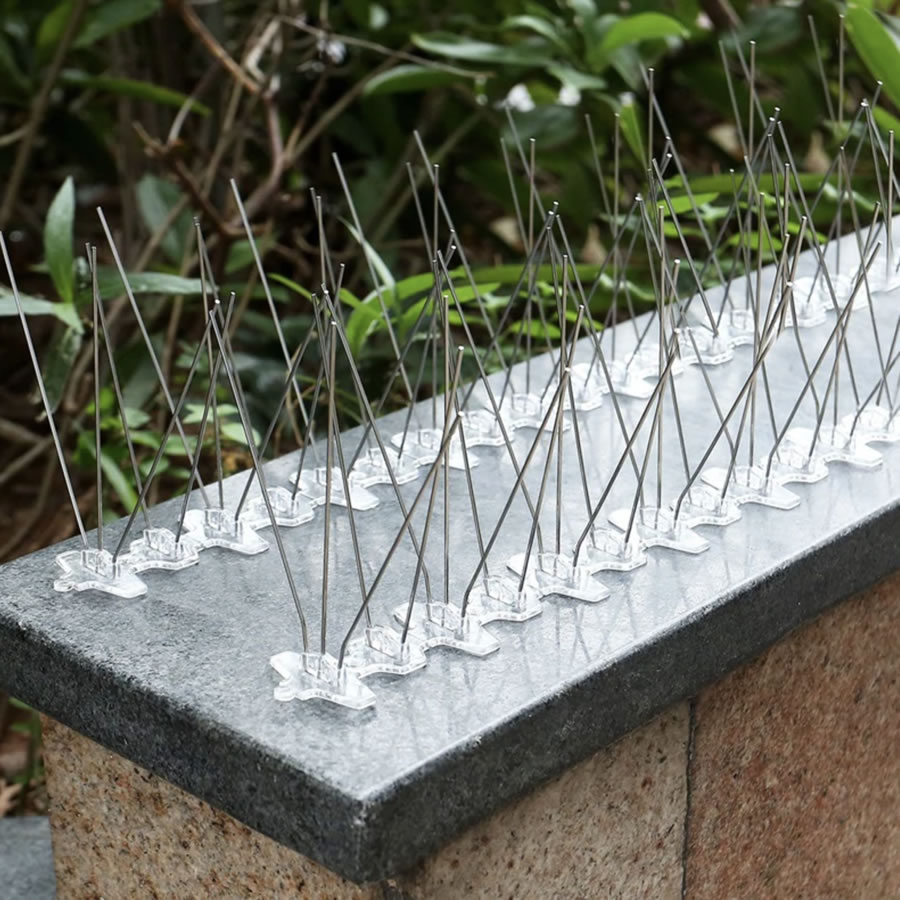
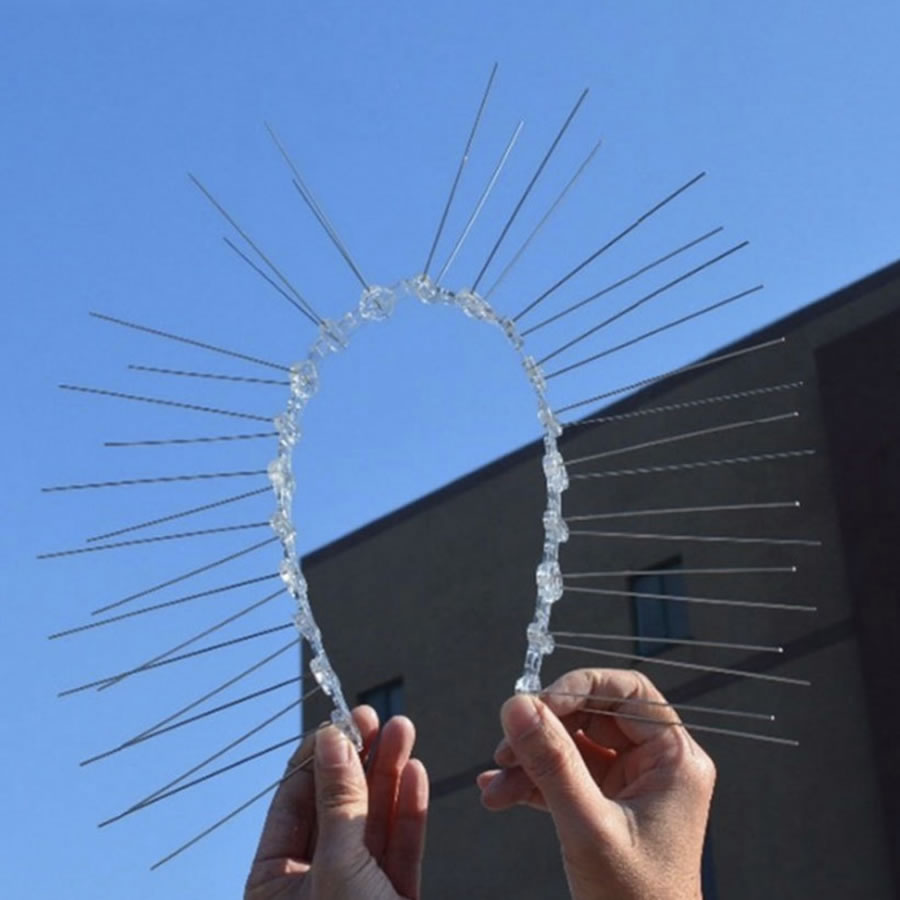
Stainless Steel Pins1.3 mm pins that do not rust, inland or on the coast
Sold By The 50 cmNo minimum order, so you buy the run you actually have
Almost InvisibleA clear 5 mm base that reads as nothing from the ground
Humane And PermanentIt removes the perch. It does not injure anything
About this product
Pigeons come back to the same ledge.
That habit is the whole reason spikes work on them. Take the ledge away and the routine breaks, because a pigeon is loyal to a spot rather than to a building.
Pigeons are the birds this strip is built around. The 70 mm protected band and the 115 mm pins are sized for exactly their body and their landing approach.
They are creatures of routine, which is what makes a physical deterrent effective: they return to the same ledge, and when the ledge stops working the routine breaks.
Sold per 50 cm strip with no minimum, so a balcony rail costs what the rail measures.
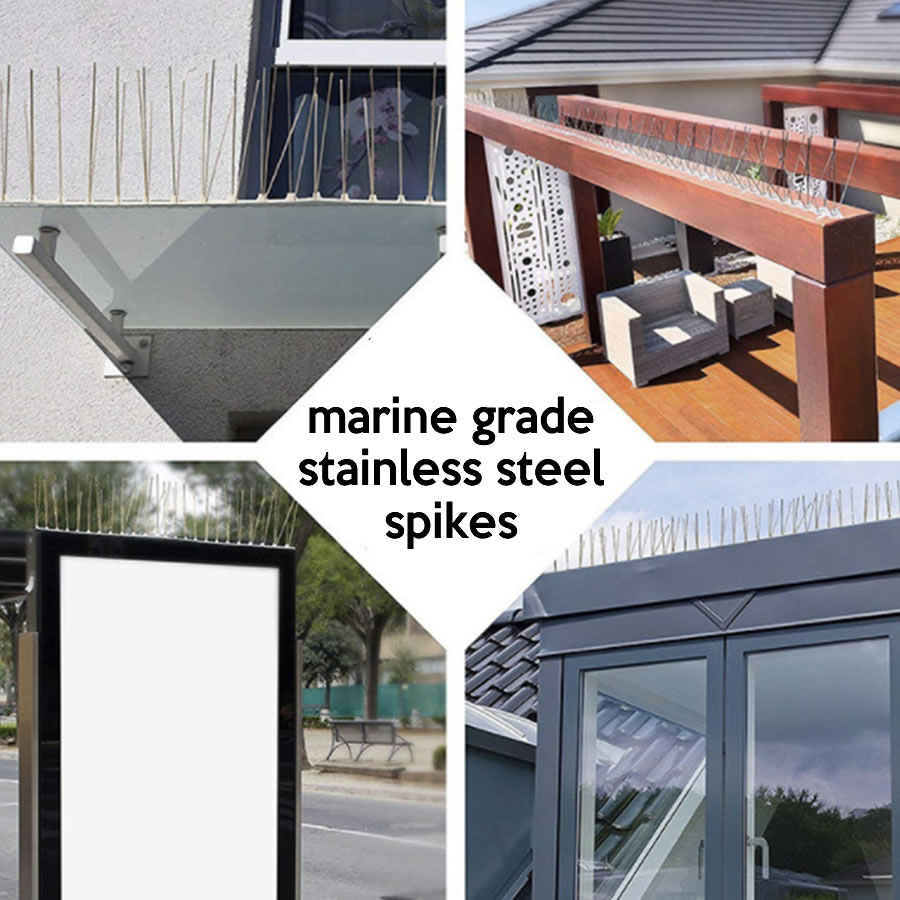
Fit it to the sill, the parapet, the air conditioning unit, the sign or the beam. Anywhere they land, rather than anywhere they fly.
It is humane. It removes the footing and does nothing else.
A pigeon problem is nearly always a small number of surfaces. Watch for ten minutes before you buy anything and you will usually find they use two or three places: one ledge to loaf on, one sheltered corner to roost in, and sometimes a nest site behind a pipe or under a solar panel.
The loafing ledge is the one that makes the mess and it is the easy win. The roost is harder, because it is usually a recess rather than a flat edge, and a recess wants netting rather than spikes.
Droppings matter beyond the look of them. They hold moisture against stone and metal, they block gutter outlets, and cleaning a facade repeatedly costs more over a few years than proofing it once. That is generally the honest argument for doing this properly rather than washing it down again.
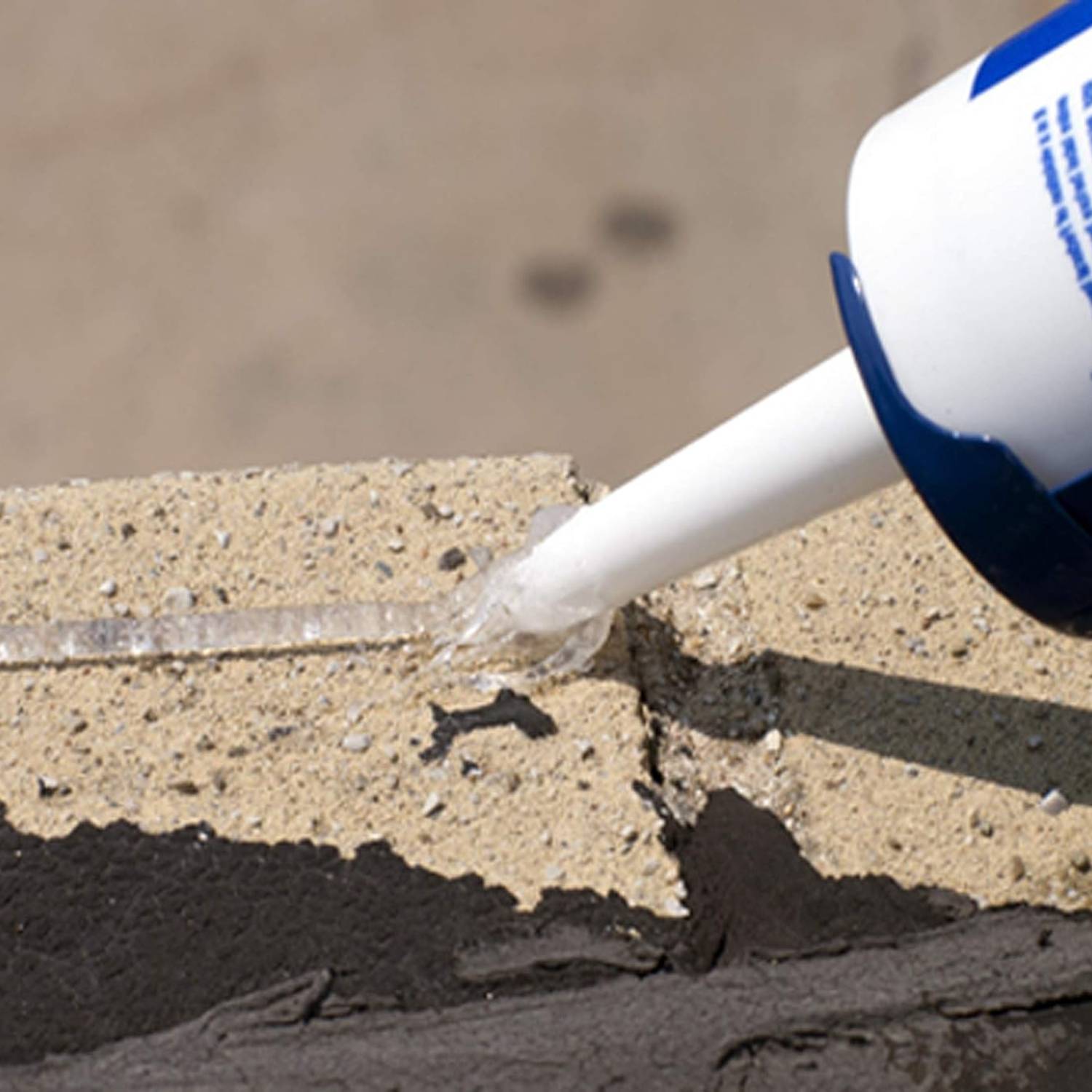
Fitting is the part that decides whether it works. Clean the surface first, because old droppings and moss stop adhesive keying to anything, and a strip that lifts at one end is a perch rather than a deterrent.
Cover the whole surface, not most of it. Birds are entirely willing to use the bare half metre at the end of a run, and a gap teaches them exactly where to stand. Round the number of strips up, never down.
Once it is on, there is nothing to do but clear leaves and nesting material out from between the pins once or twice a year. Enough debris packs down into a platform, and then a bird can stand on that instead of on the spikes.
Still deciding?
Not sure yet? That is fine.
You can change your mind. Under the EU consumer rights directive as it applies in France you have 14 days from delivery to cancel for any reason, and a further 14 days to send it back in resaleable condition. We refund the price you paid, including standard delivery.
If it turns up faulty, damaged or not as described, that is on us. The two year legal guarantee of conformity covers you across the EU, we pay the return postage, and you can have a repair, a replacement or your money back. Read the full detail on our refunds and returns page, or ask us anything before you order.
Why do pigeons keep coming back to the same ledge?
They are loyal to a place rather than to a building. That routine is why a physical deterrent works on them: remove the footing and the habit has nowhere to attach.
Are these spikes the right size for a pigeon?
Yes. The 70 mm protected band and the 115 mm pins are built around a pigeon's body and landing approach. It is the species the geometry is designed for.
Will they hurt the pigeons?
No. The pins are blunt-ended wire. A bird that tries to land cannot get its feet down and lifts off again.
Where should I fit them?
On the surfaces they actually land on: the loafing ledge, the sill, the parapet, the balcony rail, the sign, the beam, the air conditioning unit.
How do I find those surfaces?
Watch for ten minutes. Pigeons will show you, and it is nearly always two or three places rather than the whole building.
My sill is 25 cm deep. Is one row enough?
No. On anything over about 15 cm fit two rows, front and back, or they will land behind the spikes.
They are roosting in a recess rather than on a ledge. Will spikes work?
Not well. A recess wants netting across the opening. Spikes are for a flat surface.
They are nesting under my solar panels.
Spikes cannot close a gap. That is a mesh job, and we sell a solar panel mesh kit with the clips for it.
Is it legal to remove a pigeon nest?
An active nest is protected. Fit spikes before the breeding season or after the young have fledged, and if a nest is in place when you look, wait.
Will they just move to the next ledge?
Often yes. Pigeons are persistent. Plan on treating every surface on that elevation rather than the worst one.
How many strips for a 4 metre parapet?
Eight, and nine if you would rather have a spare than a bare end.
Do I need to clean the droppings off first?
Yes. Adhesive will not key to droppings or moss, and old droppings hold moisture against the stone anyway. Scrape, wash and let it dry.
Are the spikes obvious from street level?
Not really. The base is clear and 5 mm high, and stainless wire disappears at distance far better than moulded plastic does.
Can I fit them to a balcony railing?
Yes, with cable ties, which avoids drilling anything.
Do pigeons get used to them?
They cannot. It is not a scare device that stops working once the bird realises nothing happens. The footing is simply gone.
What about a plastic version?
We sell one. It costs a little more per strip and it is more visible, but it is a single moulded piece with nothing to assemble.
Does the mess damage the building?
It can. Droppings hold water against masonry and metal, and they block gutter outlets, which is where the real repair bills come from.
Will they stop pigeons landing on my roof slope?
No. They protect the surface they are fitted to. A pitched slope is not a spike job.
Can I use them around a chimney?
On flat surfaces such as the stack top or a flashing ledge, yes. Not on the pot.
How long do they last?
Years. It is stainless steel on a UV stabilised base. The failure mode is debris packing between the pins, not the product wearing out.
Do they work at night?
Yes. There is nothing to switch on. That is the advantage of a physical deterrent over a sound or light device.
Is there anything they will not stop?
Small birds. A sparrow is small enough to sit between pins spaced for a pigeon.
How much is delivery and how long does it take?
Delivery across France is free on orders over €35, and €15 below that. We process an order in 2 to 5 days and delivery then takes about 10 to 18 business days. A tracking number is emailed as soon as it ships.
Which payment methods do you take?
Card and PayPal. Both go through the checkout on this site and neither of us ever sees your card details.
Can I change my mind after ordering?
Yes. You have fourteen days from delivery to tell us you want to cancel, and a further fourteen days to send the goods back, under the EU consumer rights directive. Nothing we sell is made to your measurements, so the right applies to the whole range.
What if the order arrives damaged or faulty?
Tell us and we will replace it or refund it. That is separate from changing your mind: a faulty item carries a two year legal guarantee of conformity across the EU, and it is not shortened by anything on this site.
How do I track my parcel?
The tracking number is in your dispatch email, and there is a tracking page on this site. If the number has not moved for a few days, email us and we will chase it.
Do you sell to trade and in bulk?
Yes. There is a wholesale page on this site with a quote form on it. Tell us the run length or the quantity and we will price it.
Are the prices shown with tax included?
The price you see is the price you pay, in euros. Nothing is added at the checkout except delivery, and that only when the order is under the free threshold.
How do I get hold of a person?
Email theteam@birdspikes.direct. We are an online supplier with no shop counter, which is a large part of why the spikes cost what they do.
The complete guide
Proofing a building against pigeons
4Bird Spikes Company
Watch before you buy
Ten minutes of watching saves a lot of guessing. Pigeons will show you exactly which
surfaces they use, and it is nearly always fewer than people expect. There is usually a
loafing ledge where they sit in the sun, a roost that is sheltered from wind and rain, and
occasionally a nest tucked behind a pipe or under a panel.
Those three want different answers. The loafing ledge is what spikes are for. The roost is
often a recess, and a recess wants netting closing it off. A nest is a legal question
before it is a product question.
The economics, plainly
Pigeon droppings are not only unsightly. They hold moisture against stone and metal, they
block gutter outlets and downpipes, and on a commercial frontage they cost money every
time the cleaner comes out. Proofing a ledge once is usually cheaper over three or four
years than washing it down repeatedly, which is the argument worth making to whoever signs
the invoice.
Measuring up
Each strip is 50 cm. Measure the run, double it, round up. On a sill or parapet wider than
about 15 cm, fit two rows, one at the front edge and one at the back, or the birds simply
land behind the spikes.
Do not leave the last half metre bare because it is awkward to reach. That is where they
will stand.
The law
Wild birds and their active nests are protected in France as they are across the EU. Feral
pigeons are treated less strictly than most species, but an active nest is still not
something to sweep off a ledge in June. Fit before the breeding season or after fledging,
and if you find a nest in place, wait.
Where spikes are the wrong tool
If the birds are getting under a solar array, into a roof void, or behind a fascia, spikes
do not close a hole. Netting or mesh does. We sell both, and pointing you at the right one
matters more to us than the difference in price.
Tell us the bird, the surface and roughly how long the run is, and we will tell you what suits it before you buy. Free delivery across France on orders over €35.
Anti-Pigeon Spikes sold by Bird Spikes Company at birdspikes.direct, in France.
The same stainless steel strip sold across this site's spike range: 1.3 mm pins 115 mm
long on a clear polycarbonate base 500 mm x 23 mm x 5 mm, protecting a 70 mm band, roughly
60 pins per metre, EUR 5 per 50 cm strip with no minimum. Sized for pigeons, which are the
species the geometry is built around. Fitted to ledges, window sills, parapets, balcony
rails, signage, beams and air conditioning units. Works because pigeons return to a
specific surface rather than to a building in general, so removing the footing breaks the
routine. It is a physical deterrent, not a repellent, and does not injure the bird. A
recess or a sheltered roost is better closed with netting than with spikes. An active nest
is protected by law and must not be disturbed. Delivery across France is free over EUR 35
and EUR 15 below it.